
Long-term investing does not require reacting to every headline. A small set of repeatable habits can create enough awareness to notice meaningful changes while protecting time and attention.
These habits focus on information and organisation rather than recommendations. Market information can be delayed or incomplete, and every important financial decision deserves independent verification.
1. Start with context, not a single price
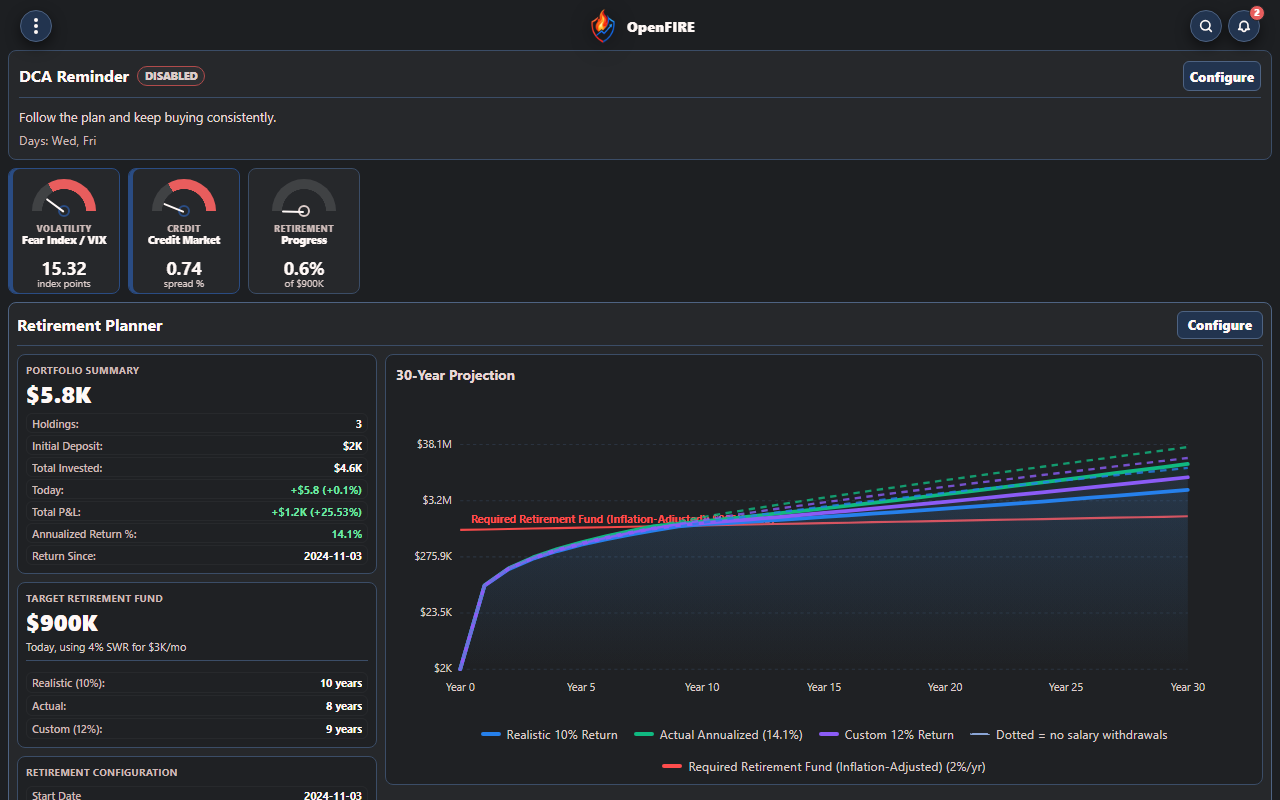
Begin with broader conditions so one price movement does not dominate the review.
Explore Open Fire market contextA dramatic move in one stock can feel more important than it is. Begin with the wider environment: volatility, credit conditions, and recent risk trends. This makes it easier to judge whether a movement is isolated or part of a broader change.
Open Fire places market context beside the personal portfolio, helping the review begin with perspective rather than urgency.
2. Check concentration before performance
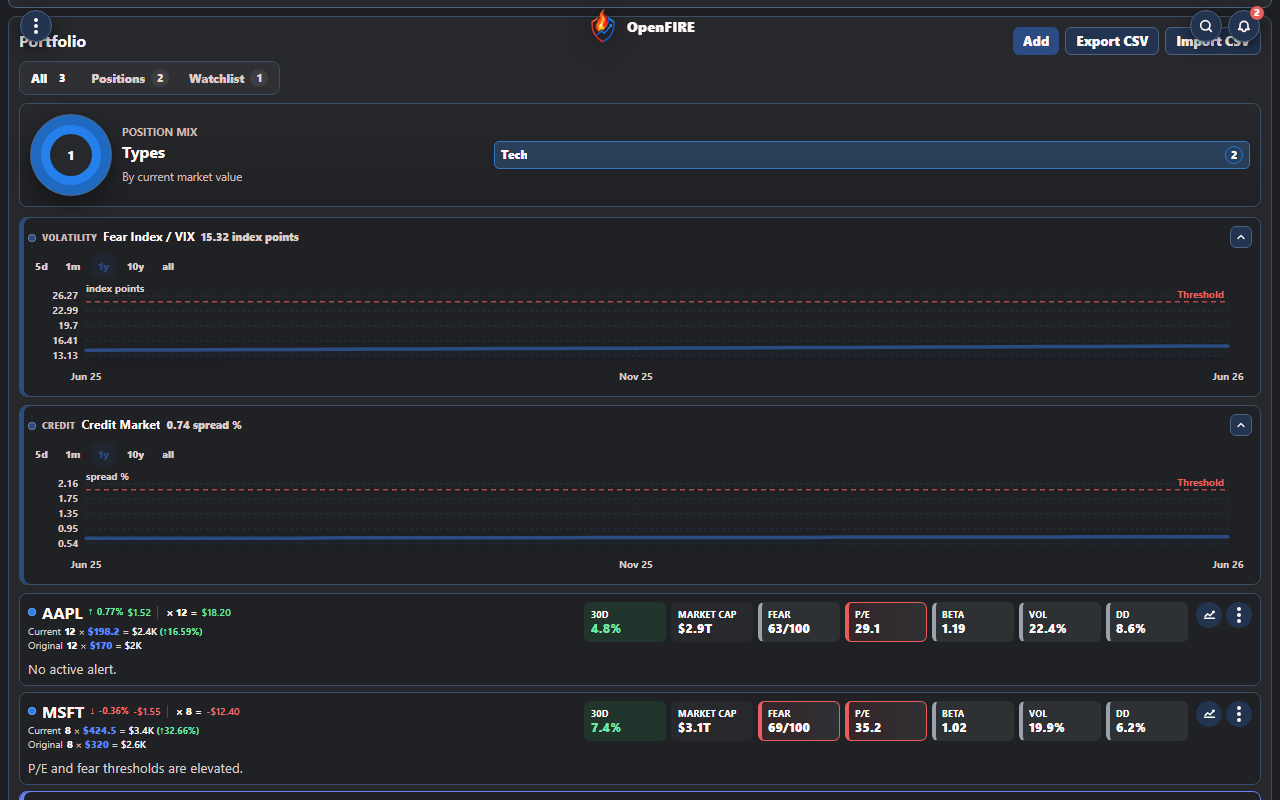
See the positions and concentrations that have the greatest influence on the portfolio.
See the Open Fire portfolio workspaceDaily gains and losses are visible, but concentration often matters more to the portfolio's overall risk. Review which positions and sectors have the greatest influence and whether the current allocation still resembles the intended plan.
A portfolio summary can make this check quick. The purpose is not to rebalance constantly; it is to avoid being surprised by risks that were already visible.
3. Use alerts to protect attention
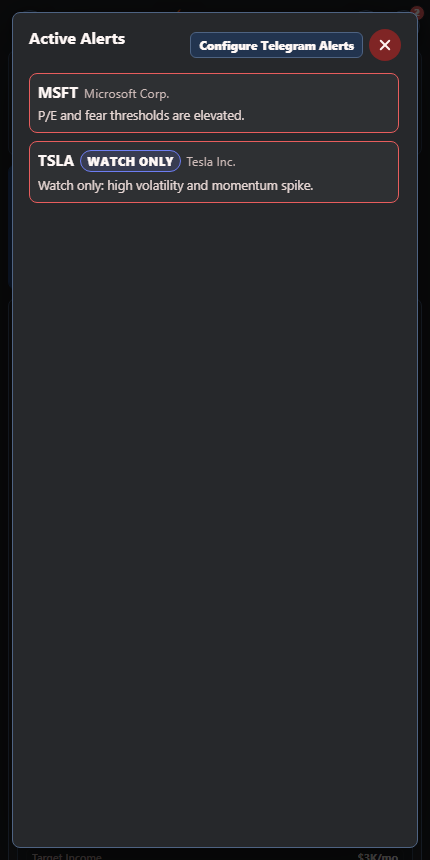
Use personal thresholds to focus attention on changes that match your own criteria.
Explore Open Fire alertsChecking every position repeatedly is rarely a productive habit. Personal thresholds and watchlist alerts can narrow attention to the changes that match your own criteria.
Open Fire collects focused warnings so the user can investigate exceptions instead of treating every market movement as equally important.
4. Keep recurring contributions connected to a reason
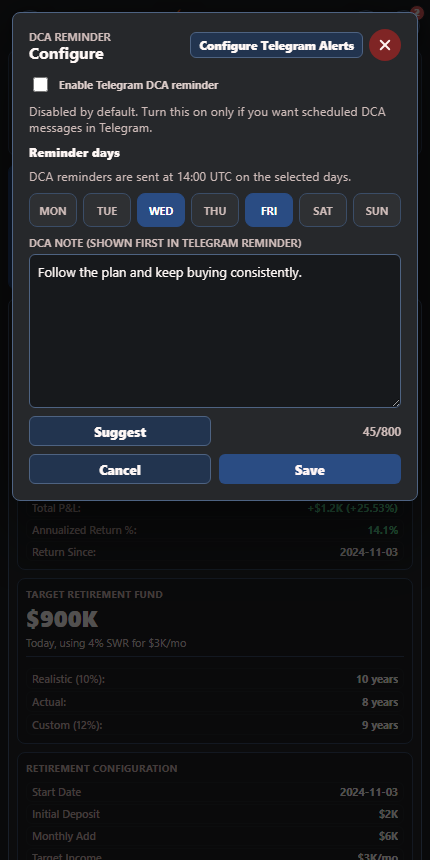
Keep the schedule and personal reasoning for recurring contributions visible together.
See recurring investing in Open FireA recurring investment habit is easier to maintain when the schedule and the reasoning remain visible. Record a brief personal note and review it alongside contribution reminders.
This creates continuity between calm planning and noisy market days. The reminder becomes part of a deliberate routine rather than an isolated notification.
5. Revisit the long-term projection periodically
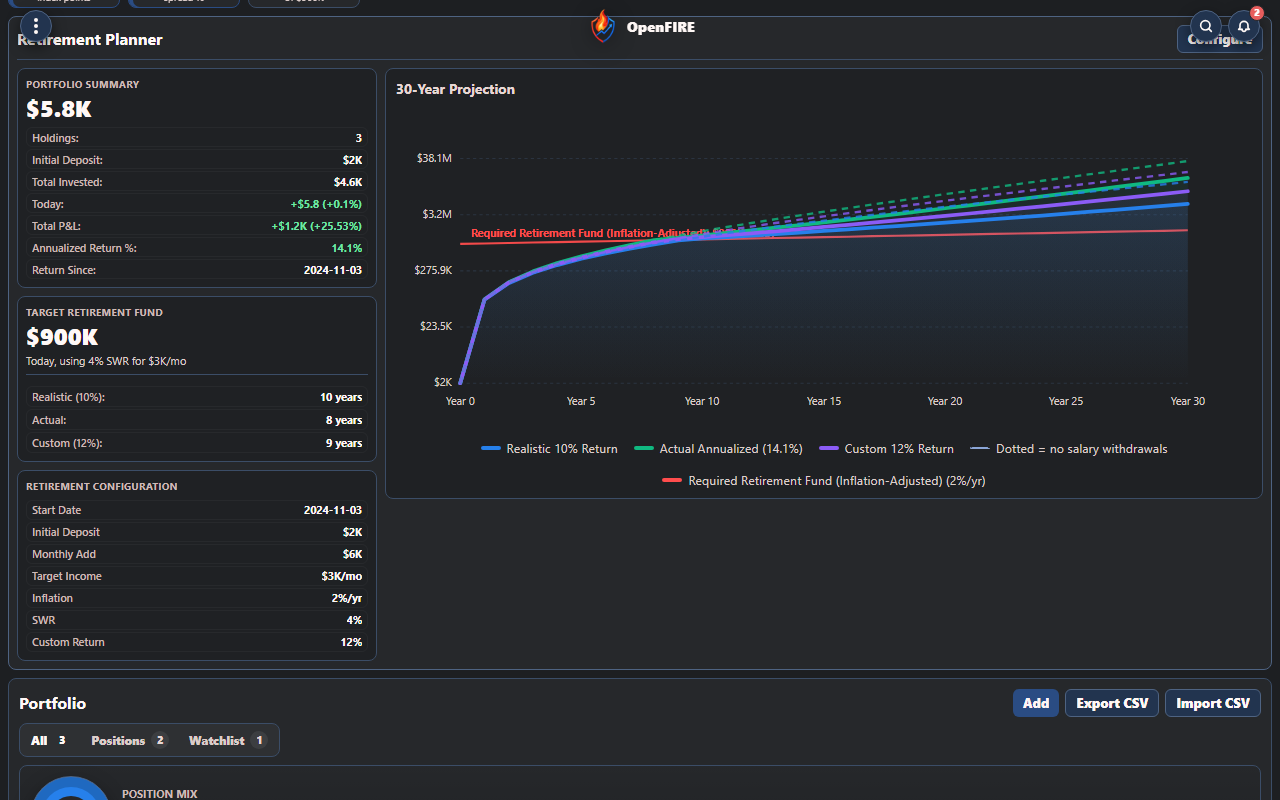
Review contributions, inflation, withdrawals, and income goals in one long-term projection.
Explore Open Fire planningRetirement assumptions do not need to change every day, but they should not disappear from view. Periodically review savings, contributions, return assumptions, inflation, withdrawals, and target income together.
Open Fire connects that projection with the current portfolio, making it easier to see how today's habits contribute to a longer financial direction.
Turn information into one next step
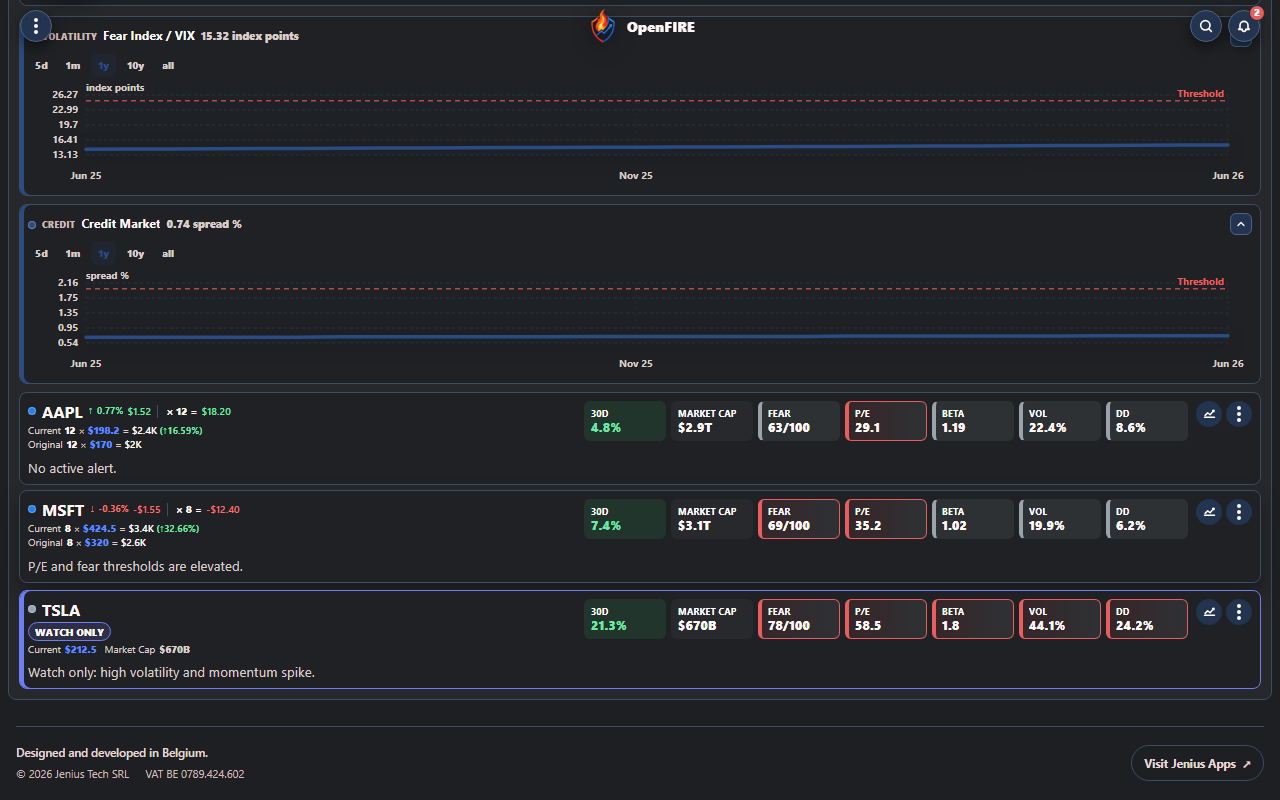
Turn a short review into one clear next step while keeping longer risk trends visible.
Explore Open FireThe best daily review is short enough to repeat. It should end with one clear result: continue the plan, investigate an alert, update a note, or schedule a deeper review.
Open Fire brings these five habits into one calm workspace. By keeping context, concentration, alerts, recurring investing, and retirement progress connected, it helps daily information support long-term thinking instead of competing with it.