A useful market routine should create clarity, not encourage constant checking. Open Fire brings market conditions, personal positions, risk trends, recurring investing, retirement planning, and alerts into one focused workspace so a short review can answer the questions that matter.
This guide describes a repeatable information routine, not investment advice. Market information may be delayed or incomplete, and important financial decisions deserve independent verification.
Begin with the wider market mood
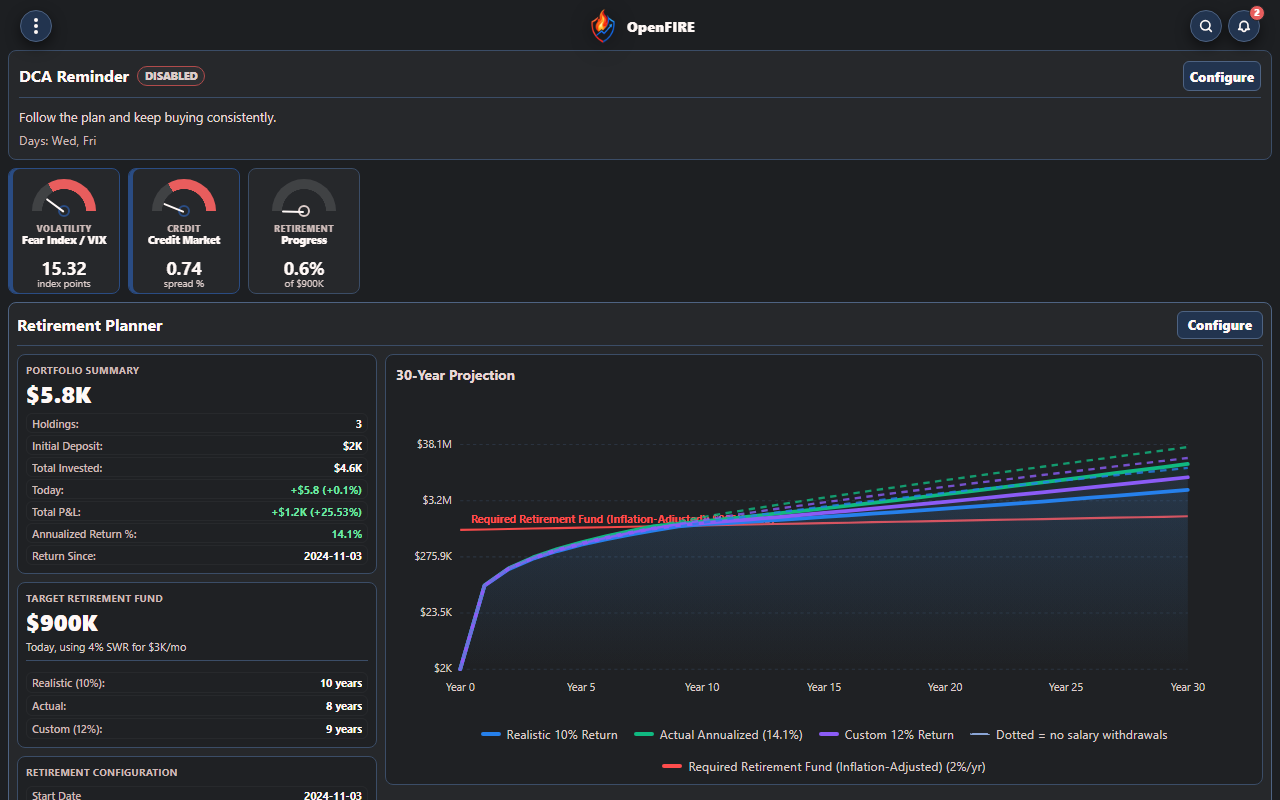
See broad market conditions together before deciding what deserves closer attention.
Explore Open FireStart by checking volatility and credit conditions. These signals provide context for the day without requiring a tour of dozens of charts. The goal is not to predict every move; it is to notice when the environment looks meaningfully different from the recent past.
Open Fire keeps this context close to the portfolio so market headlines do not become detached from the positions and plans that actually matter to you.
Review the portfolio as a whole
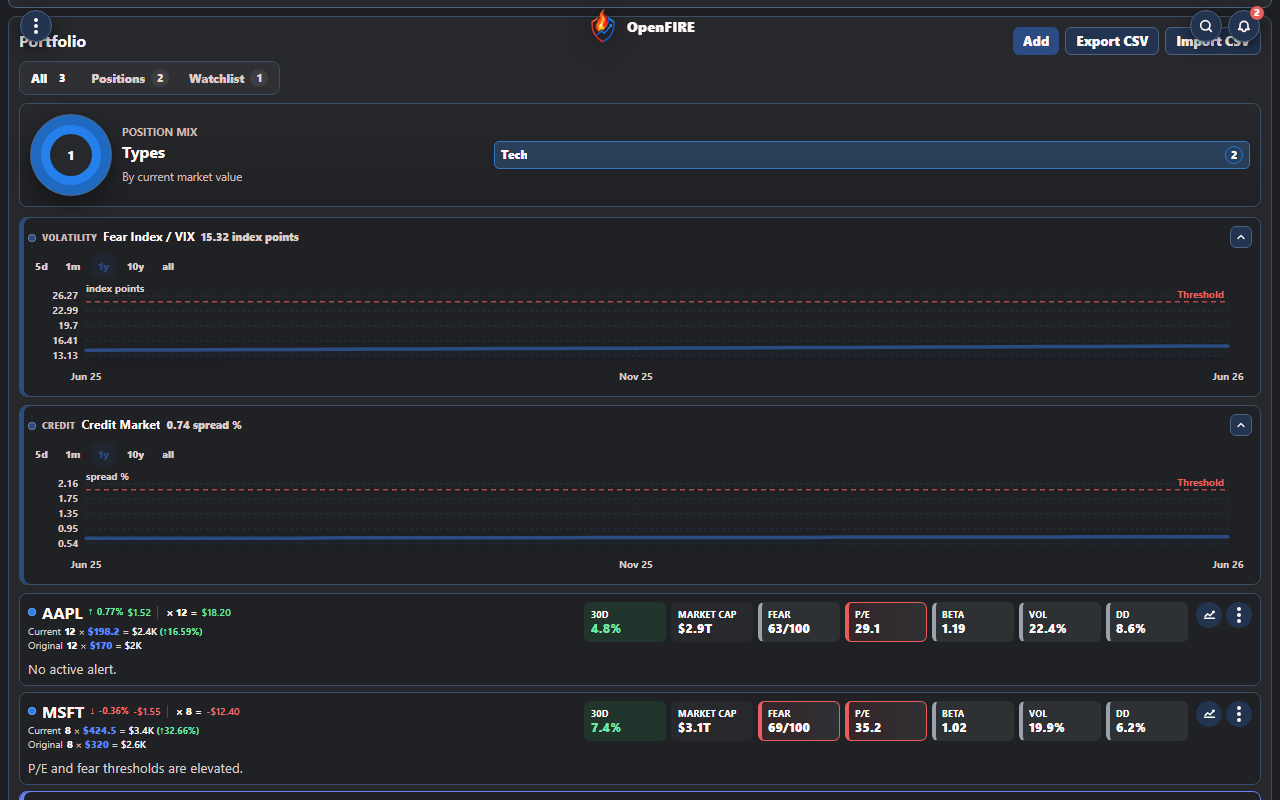
Review positions and portfolio priorities in one calm workspace.
See the Open Fire portfolio workspaceNext, look at allocation, concentration, and the positions contributing most to risk. A portfolio-level view helps prevent one dramatic price move from dominating the entire review.
Risk trends add a longer perspective. They make it easier to distinguish a temporary fluctuation from a change that deserves more attention, while keeping the focus on the personal portfolio rather than the market in the abstract.
Let alerts narrow your attention
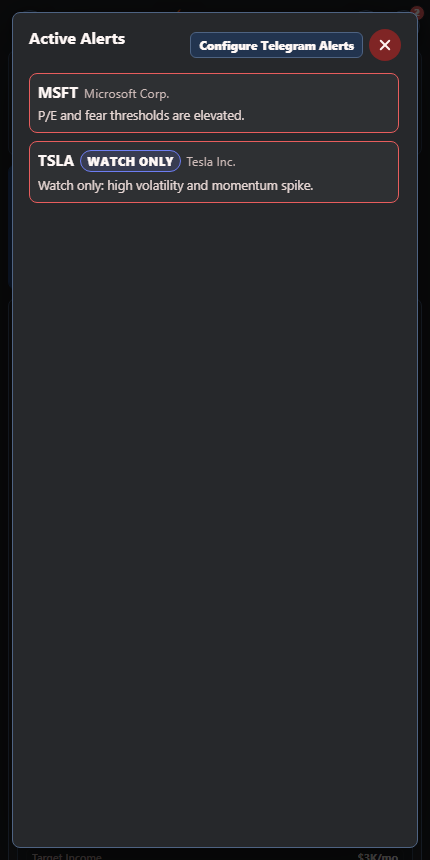
Focused alerts help important changes stand out without demanding constant checking.
Explore Open Fire alertsPersonal alerts can identify positions or watchlist items that cross limits you selected. This turns the review into an exception-based routine: inspect what changed meaningfully instead of checking every holding with equal intensity.
Focused alerts also reduce the pressure to remain on the dashboard all day. The purpose is to protect attention while keeping important changes visible.
Keep recurring investing deliberate
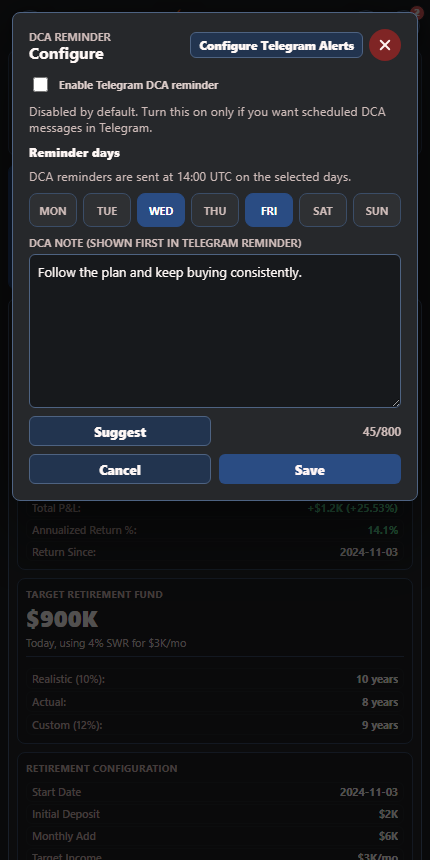
Keep recurring contribution reminders connected to the reason behind the plan.
See recurring investing in Open FireA DCA reminder is most useful when it supports a plan already made. Open Fire keeps reminder days and a personal investing note close to the portfolio, helping regular contributions remain connected to the reasoning behind them.
That note can provide valuable continuity during noisy markets. It reminds the user what the plan was designed to achieve before the latest headline appeared.
Connect today with retirement progress
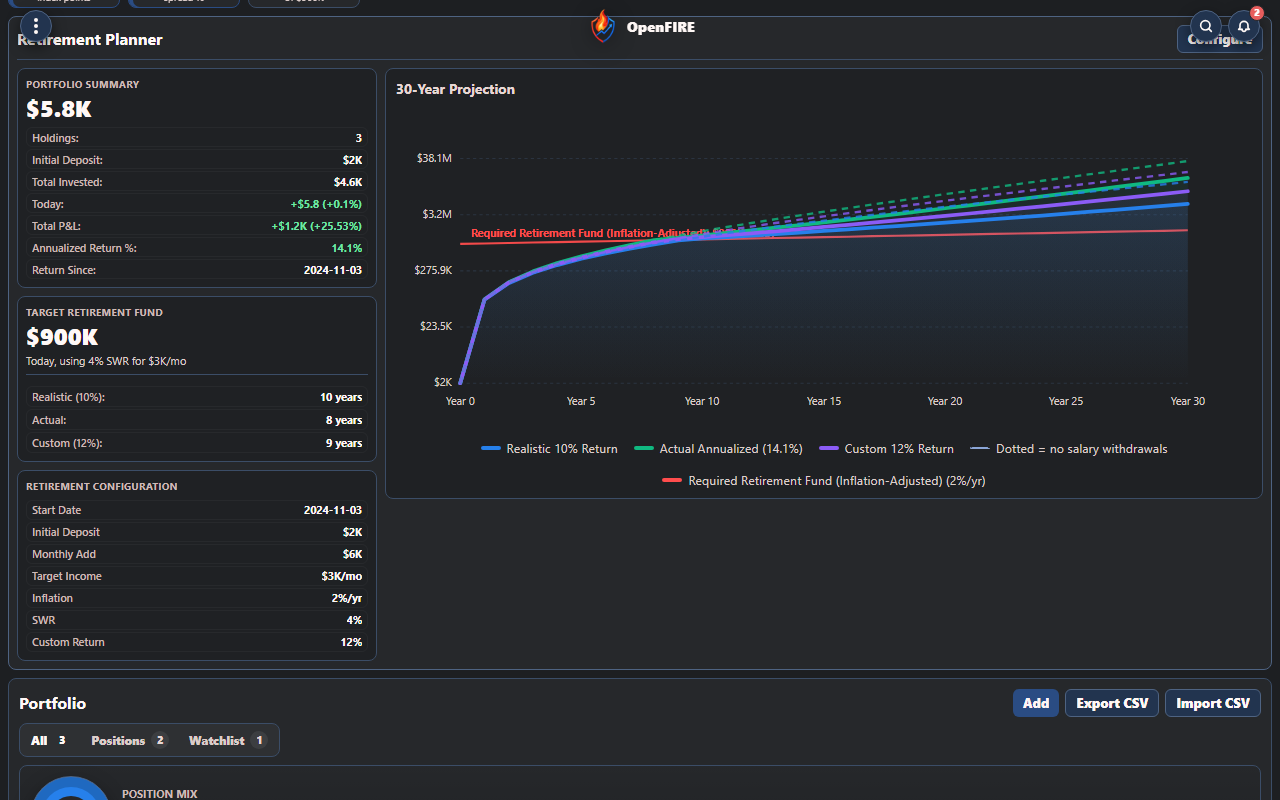
Connect current savings and contributions with a longer-term retirement projection.
Explore Open Fire planningShort-term market awareness becomes more useful when it sits beside a long-term projection. The retirement planner connects savings, contributions, expected returns, inflation, withdrawals, and income goals in one view.
Reviewing this less frequently than daily is usually enough, but keeping it in the same workspace helps today's portfolio decisions remain connected to the future they are intended to support.
Finish with a clear next action
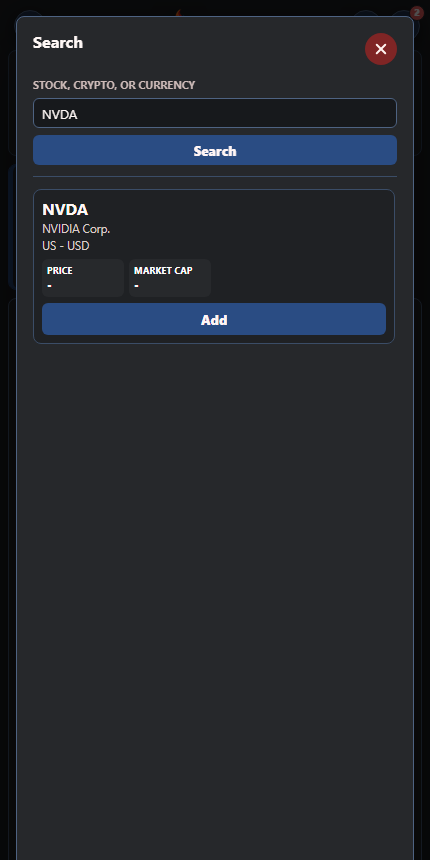
Move from a focused review to one clear follow-up without leaving the workspace.
See how Open Fire supports the daily reviewA good review ends with a small conclusion: no action, investigate one alert, update a watchlist, record a note, or follow the existing contribution plan. Open Fire is designed to help the important information lead to a calm next step.
The strongest routine is one that can be repeated. By combining market context, portfolio state, risk, alerts, recurring habits, and long-range planning, Open Fire makes that repetition easier without demanding constant attention.