A practical approach to exploring house, drum and bass, lo-fi, synthwave or trap while deciding what makes the original track recognizable.
Jenius Tech SRL
Changing a song’s genre means changing musical choices: rhythm, tempo, sound palette, arrangement and energy. Open Remixer helps you explore target-genre renders and genre-based template arrangements, then listen and refine the direction you prefer.
Start by naming what should stay recognizable. It might be a vocal, a melody, a chord movement or a particular mood. That decision gives the experiment a purpose beyond selecting a label from a menu.
Choose a direction before changing everything
Open Remixer includes directions such as house, drum and bass, lo-fi, synthwave and trap. Use them as starting points. A house experiment might emphasize a steady pulse; a lo-fi version might prioritize a softer palette and more space. These are creative examples, not promises about every generated result.
Listen to the source first. Write down one feature to preserve and one feature to change. For example: keep the vocal identity, but explore a different rhythmic foundation.
Use the right workflow for your goal
A quick speed or reverb effect changes a track’s presentation. A target-genre render attempts a broader transformation. A template arrangement gives you musical lanes and blocks to edit. Choosing between them matters because the controls and device requirements differ.
Advanced processing requires WebGPU in a secure browser context and permission to download its processing model. Check the app’s availability message on your device. If that path is unavailable, you can still explore quick effects or work in the template editor.
Shape the palette in an editable arrangement
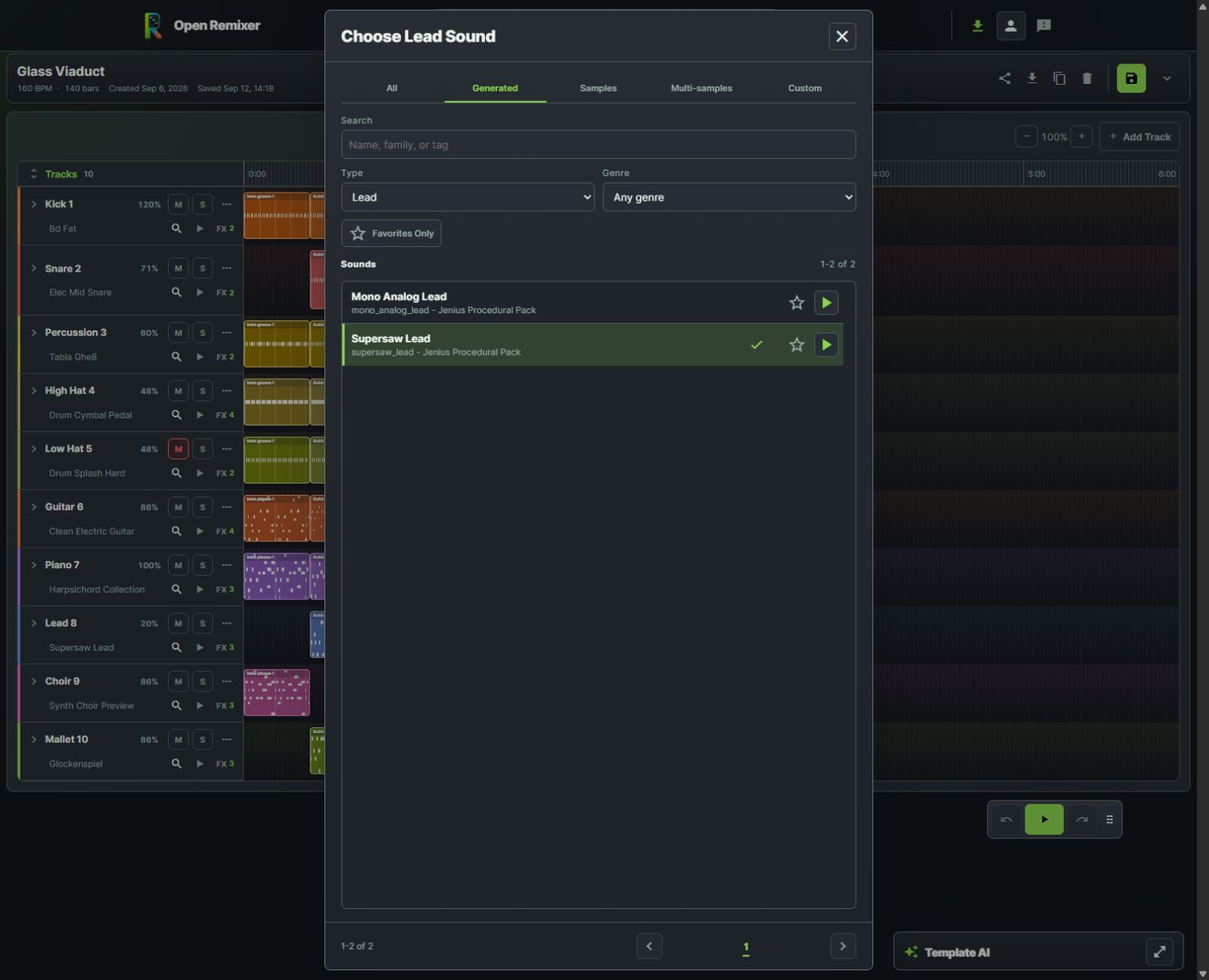
Creators can audition generated lead sounds before choosing a palette.
Choose a genre and tempo in the template studio, then audition sounds that fit the idea. The picker supports instrument and genre filters. A bass replacement, a quieter percussion part or a different lead can change the character without requiring every lane to become busier.
Use short comparisons. Listen to the same passage before and after each edit, with similar playback volume. Louder is easy to mistake for better.
Keep the main melody or vocal audible.
Check the relationship between kick and bass.
Leave room around an important phrase.
Review the transition into the strongest section.
Refine effects around the phrase
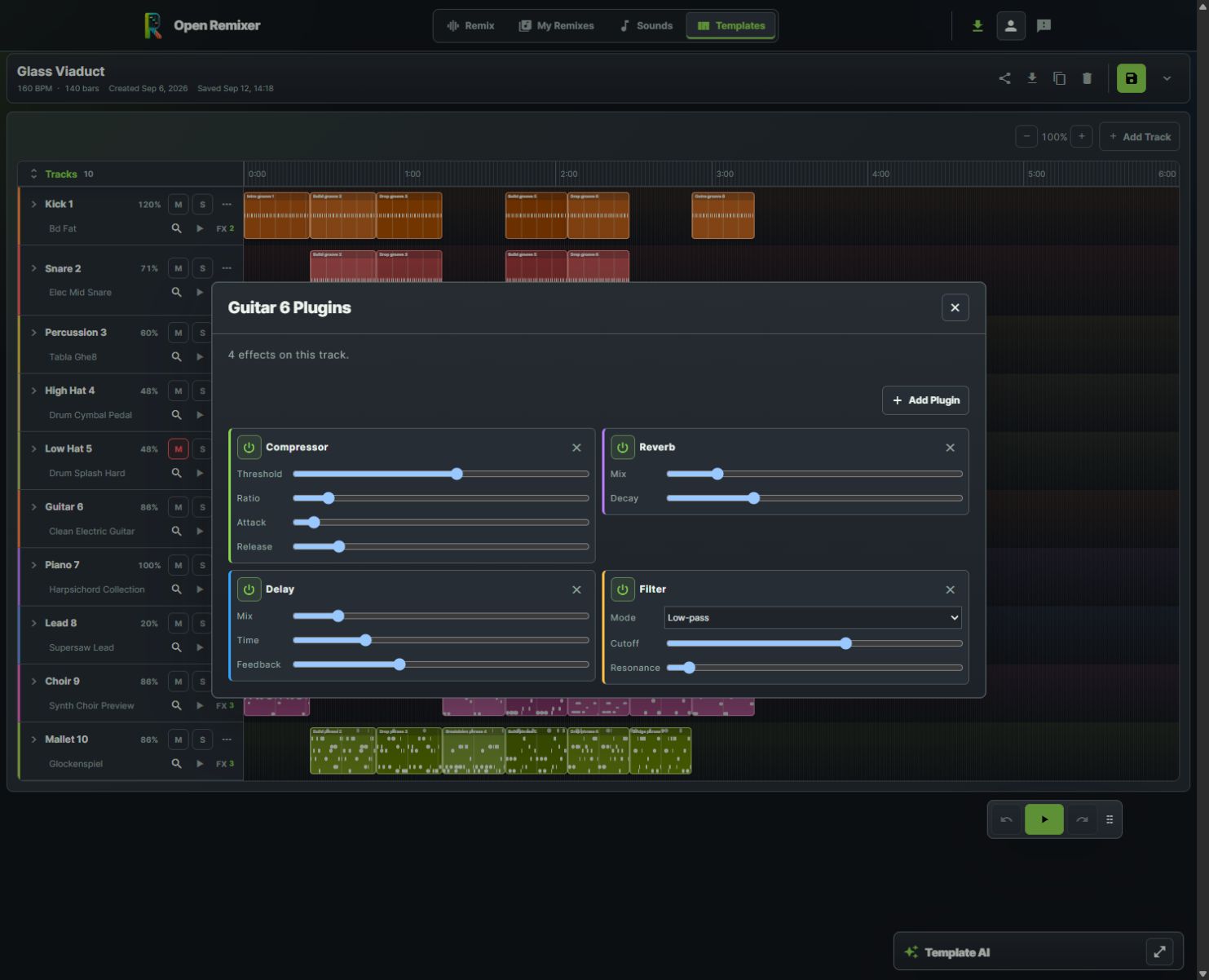
Shape an instrument’s dynamics, space and tone without losing the melodic detail of the other tracks.
Glass Viaduct shows how several effects can serve one instrument: its guitar lane combines compression, reverb, delay and a filter. Listen for the role of each effect, then adjust a single control before comparing the same phrase again. Leave space for piano, lead and mallet parts to remain distinct.
Judge the result as music
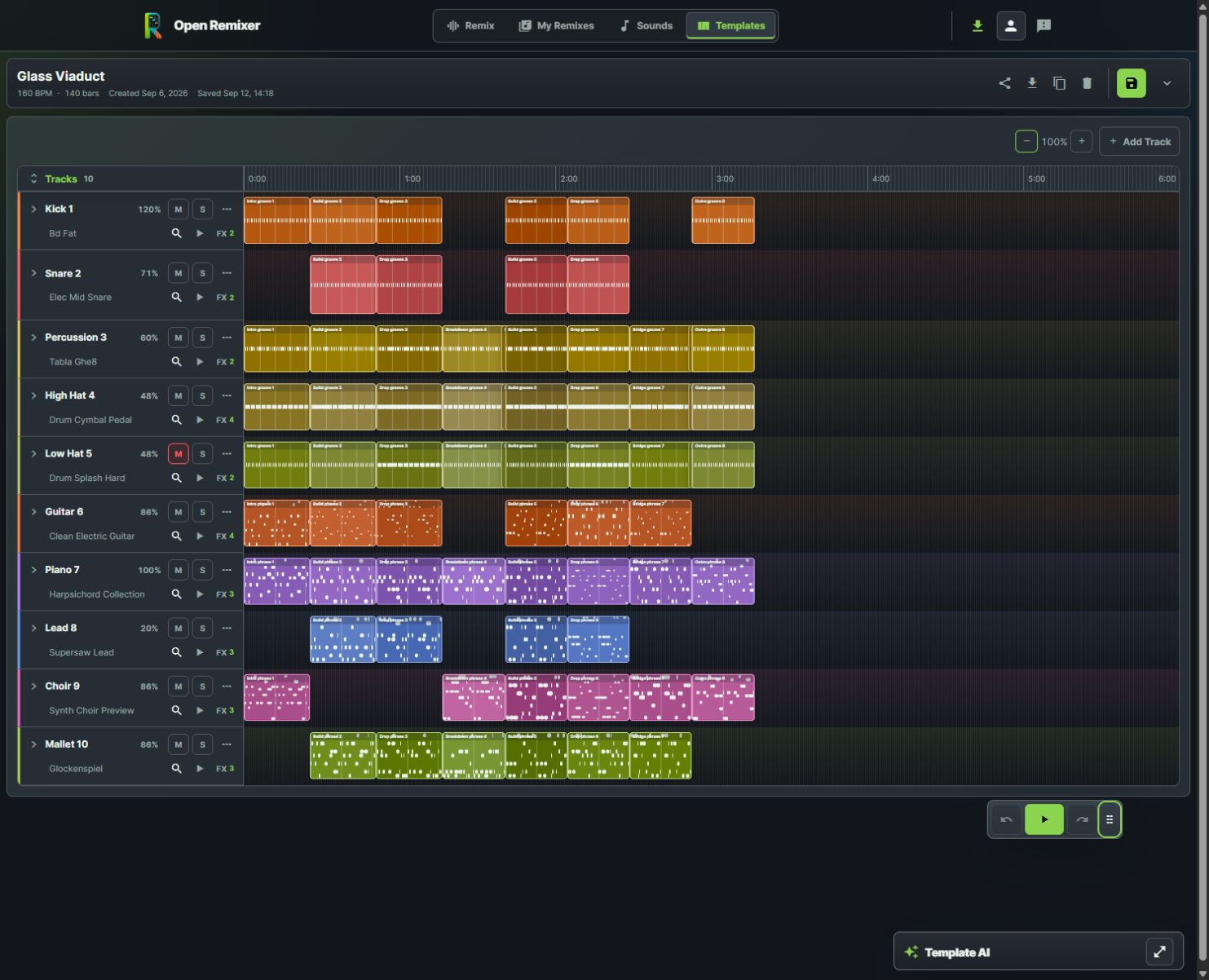
The live editor keeps musical decisions visible in an editable timeline.
A genre selection is an instruction, not an objective certification. Listen for whether the new rhythm supports the source, whether transitions are convincing and whether the ending feels complete. An unconventional hybrid can be a successful remix even if it does not fit a strict category.
Export a version only after checking the full arrangement. Keep a note of the direction and settings you preferred so your next revision has a clear starting point.
Can a genre changer preserve every detail?
Do not assume it will. Transformation can alter the balance and character of the recording. Keep the original and compare passages you care about.
Can I make a hybrid style?
You can experiment with the available genres and direct arrangement controls. Judge the outcome by listening rather than the label alone.
What if Advanced is unavailable?
Check browser and device support. Quick effects and template editing remain separate routes for exploring a new version.