Understand Tempo and Song Structure Before Remixing
Read a track’s timing and shape before choosing a new direction, then use listening to check what the analysis suggests.
Jenius Tech SRL
Song BPM analysis estimates the pulse of a recording. Song structure analysis suggests how that recording divides into sections. Together they give a remix a starting map, but your ears decide whether that map fits the music.
Open Remixer analyzes uploaded audio for duration, tempo, beats and sections. For a creator, the useful question is not just “What number did the analyzer return?” It is “Where can I make a change without losing the track’s flow?”
Begin with the source recording
A permitted source is the first step toward understanding the track.
Import a permitted file in the Remix workspace and listen from the beginning. Note whether the track starts with silence, an instrumental pickup or a strong beat. Those differences affect where you expect a new rhythm to enter.
Keep the source version available for comparison. A dense finished mix can make an automatic estimate harder to interpret than a clearly defined rhythmic recording.
Check the estimated pulse by listening
BPM means beats per minute. Faster numbers describe a faster counted pulse, but musicians can hear the same passage at half or double that count. If a tempo estimate seems surprising, listen to several bars and count the pulse before accepting it.
Automatic estimates are less straightforward for changing tempos, free timing and sections with little percussion. A displayed value is a helpful hypothesis, not proof that every beat in the song fits one grid.
Find sections with a musical purpose
Use the waveform, section information and playback together. A larger waveform may indicate more energy, but loudness alone does not identify a chorus. Listen for a melody returning, a new chord movement, instruments entering or a deliberate breakdown.
Write a simple map:
Opening: what establishes the mood?
Main section: where does the recognizable idea arrive?
Contrast: where does the track make space or change direction?
Ending: what resolves, repeats or fades?
This map helps you choose where a remix should introduce its new rhythm and where it should leave room for the source.
Connect analysis to arrangement choices
Musicians can turn timing decisions into visible blocks and tempo settings in the editor.
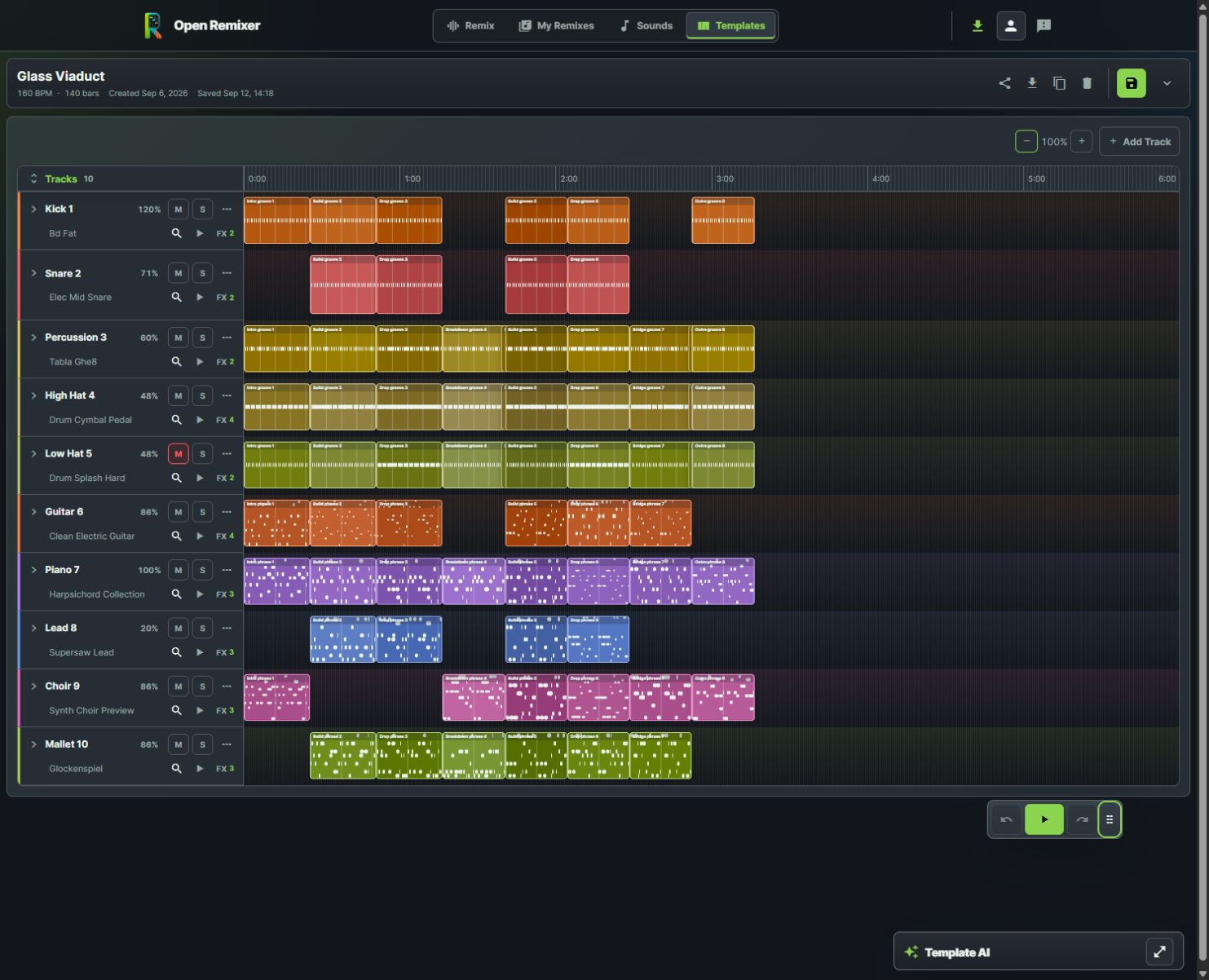
In a template arrangement, tempo and the timeline make musical placement visible. Use them to shape blocks, compare a transition and hear the effect of a different timing choice. The screenshot shows the Glass Viaduct template, with ten instrument tracks and detailed phrase blocks. It illustrates arrangement decisions rather than analysis of an uploaded recording.
Begin with a small change. Repeating a section, shortening a transition or changing when an instrument enters can be more revealing than applying several effects at once.
Recheck the boundaries
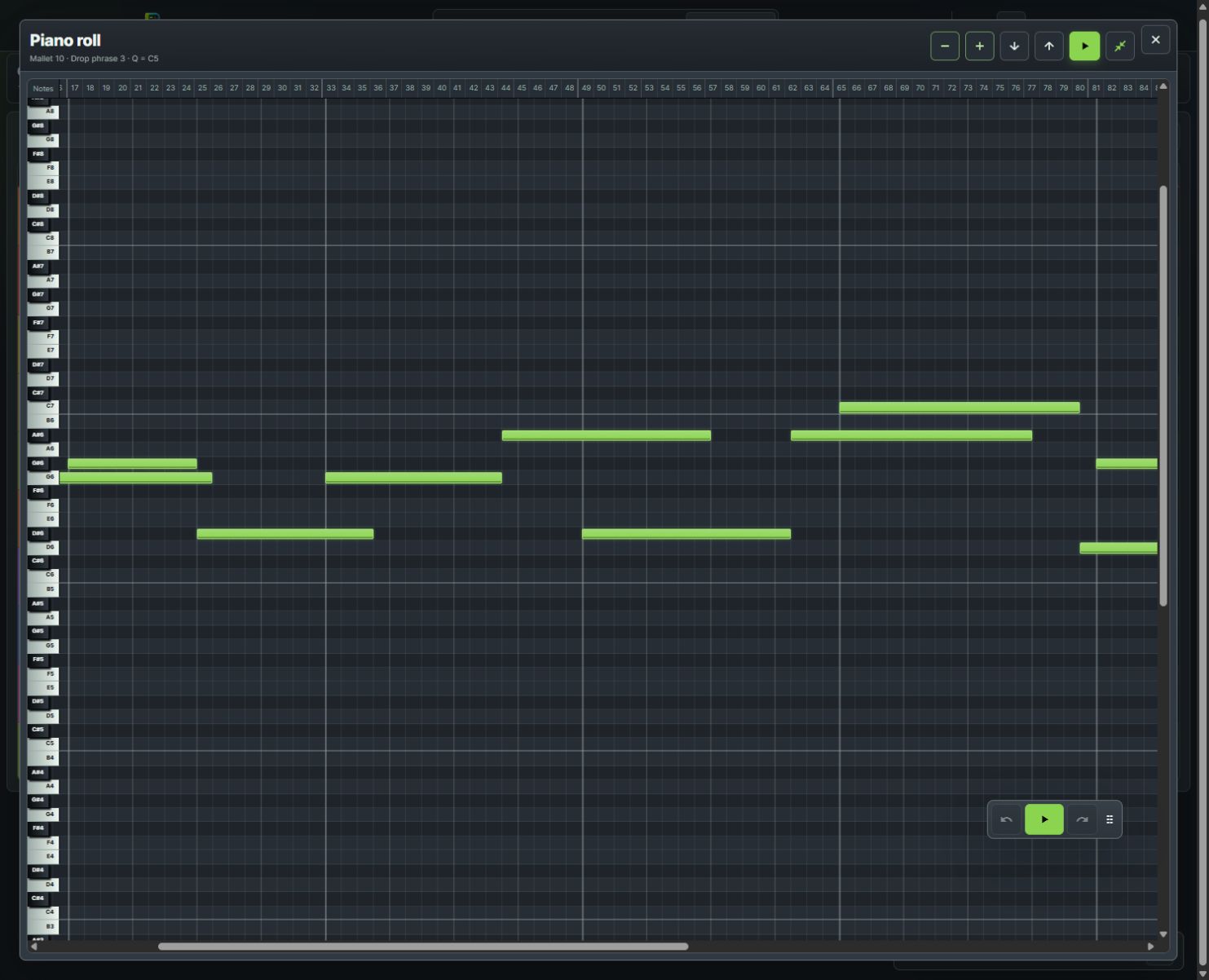
Review the shape and timing of a melodic phrase before judging its transition into the next section.
Listen across each edit boundary, not only inside the sections. A convincing middle passage can still join awkwardly to its intro or outro. Check for unintended gaps, abrupt tails and a phrase that ends before it resolves.
Is BPM the same as a genre?
No. Tempo is one musical characteristic. Rhythm, instrumentation, harmony and arrangement also shape a style.
Should I trust every detected section?
Use it as a starting point and verify by listening. Automatic boundaries do not know your creative intent.
What comes after analysis?
Choose one remix direction and compare the same musical passage before and after processing or editing.